
Debt: The Good, The Bad and The Ugly
Three faces of business debt - and why the difference between them usually comes down to advice, not appetite.
National debt is dominating international headlines right now. In the US, gross national debt passed $39.7 trillion in July 2026 - pushing the debt above 100% of GDP for the first time since the Second World War. Interest payments alone on that debt are on course to cross $1 trillion this year, a first, and now exceed what the US spends on national defence. It isn’t just a US story either: government debt is at or near record levels across most of the developed world.
Closer to home, the detail that matters most for anyone running a business isn’t the Bank of England’s headline rate - it’s held at 3.75% since December - but the 10-year gilt yield, the rate that longer-term borrowing, mortgages and swap-based business lending are priced against. That yield fell to around 4.40% in early January 2026 on hopes of further rate cuts, but has climbed steadily since, reaching a two-month high of 5.06% by late July as inflation concerns, geopolitical risk and government borrowing pressures pushed longer-dated yields back up. The Bank’s policy rate may be on hold, but the cost of longer-term borrowing has been rising underneath it all year.
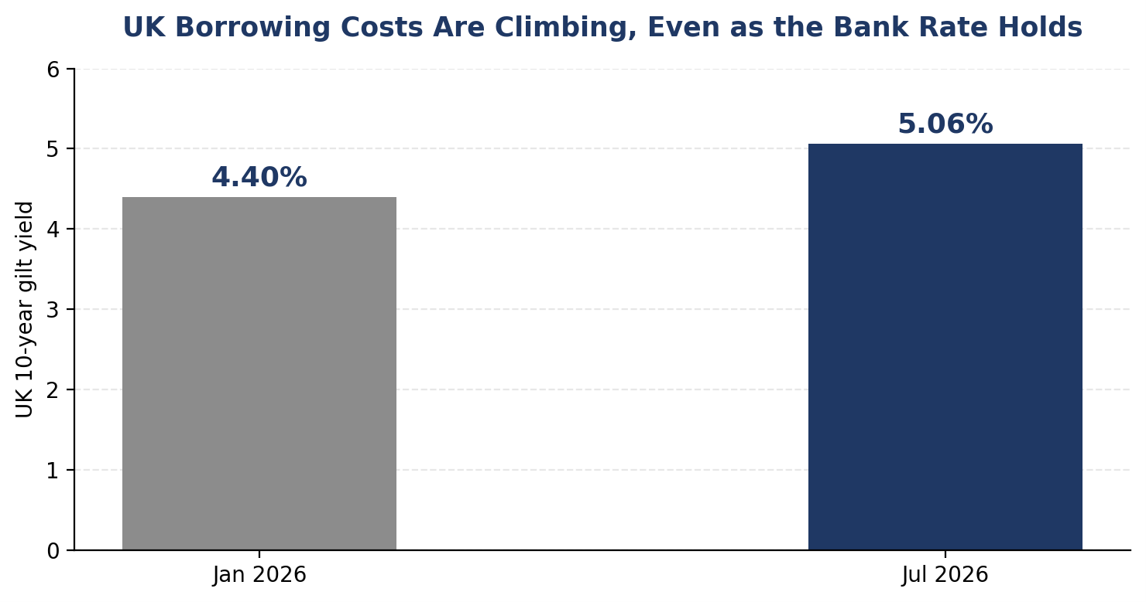
Source: Trading Economics, UK 10-Year Government Bond Yield
It’s easy to read all of this as a story that happens somewhere else, at a scale that has nothing to do with a business in Belfast or Derry. But the underlying lesson is the same one we see play out at SME level, closer to home, every week: debt isn’t inherently good or bad. Used well, it’s a lifeline, the thing that lets a government, or a business, invest and grow through periods it couldn’t otherwise afford. Used without proper understanding or a plan for how it gets repaid, it becomes the very thing that erodes the foundation it was meant to support.
That tension, between debt as opportunity and debt as risk, is exactly what we see across the businesses we work with. Debt gets a bad reputation in business conversation, usually because people only hear about it when things go wrong. But debt itself isn’t good or bad; it’s a tool. What determines the outcome is how it’s structured, whether it’s matched to the business, and whether the owner properly understands what they’ve signed up to.
We see all three faces of debt regularly in this business. Here’s what separates them.
The Good
This is debt used as intended: to fund growth the business can genuinely service, structured against a realistic understanding of cash flow, with a clear purpose and a clear exit or repayment path. The owner understands the product before they sign it, not after.
| It’s difficult to get debt for this kind of asset class, which made structuring the right package even more important.
A recent example: over the last twelve months, GDP Partnership worked with a client building out an energy storage business - a sector that’s notoriously difficult to fund via the debt markets. Energy storage assets don’t fit neatly into how most lenders assess risk, and plenty of good projects struggle to get past the door for that reason alone.
Our team ended up putting together a blended debt and equity package that matched the risk profile of the asset to the right capital at the right stage. The project is now up and trading. And because we structured it with refinancing in mind from day one, we’ll be moving the debt onto cheaper, more affordable terms within the next twelve months, once the asset has a trading track record behind it. We will be moving this debt to one of the mainstream lenders in Belfast City Centre, who will be happy to refinance, as the construction risk no longer exists. It is another example of handing out an umbrella when the sun is shining, but that’s how they work!
The above example is what "good" debt looks like in practice: not just getting a deal done, but structuring it so the client isn’t stuck with the first, most expensive capital forever. Debt, and equity where it’s the right tool, can absolutely work for you. But it must be structured properly from the start.
The Bad
This is where things start to slip, often quietly and quickly. A business takes on more than it can comfortably service. Facilities and arrears start to stack up without anyone having a clear picture of total exposure. A product gets used for the wrong purpose - short-term finance covering what should have been long-term capital, for example. Too often the owner doesn’t fully understand what they signed up to, until repayments start to bite.
We’ve seen this pattern too many times: an owner takes their eye off the ball, stops paying close attention to the detail and the numbers, and keeps using a hammer to crack a nut, reaching for the same expensive, oversized facility to solve every problem, rather than stepping back and asking whether it’s still the right tool for what the business needs.
The business often still looks fine from the outside at this stage. What’s deteriorating first is usually the owner: sleepless nights, constant mental arithmetic about which payment is due when, avoiding calls from the bank, and a level of stress that starts to affect health, relationships and decision-making, long before the accounts show real distress. It is not dissimilar to how an iceberg originates, long before the captain sees it pop its head above the ocean. Typically, when we analyse these cases, we see owners:
Juggling repayments across multiple facilities without a consolidated view of total debt service
Taking on new borrowing to service existing borrowing
Not knowing the true blended cost of capital across the business
Avoiding conversations with lenders instead of having them early
This is the stage where the right intervention - restructuring, refinancing, or simply an honest conversation about what the business can afford - can still turn things around. Left unaddressed, it becomes something much harder to fix.
The Ugly
This is where things fall apart. Lenders move to enforce, insolvency practitioners get involved, and what began as a funding decision becomes a disaster recovery situation. Businesses are lost. In many cases, so are homes, marriages, and the owner’s sense of who they are outside the business. The mental toll of this stage is often underestimated by everyone except the person living through it.
We’ve seen far too many examples of this, particularly since 2010. So many business owners put their heads in the sand, hoping things would just get better on their own and their problems would evaporate. Unfortunately, that’s not how debt, or business, works. Problems left unaddressed don’t resolve themselves; they compound, and by the time the bank moves, the options left on the table are far fewer and far worse than they would have been a year, or even a few months, earlier.
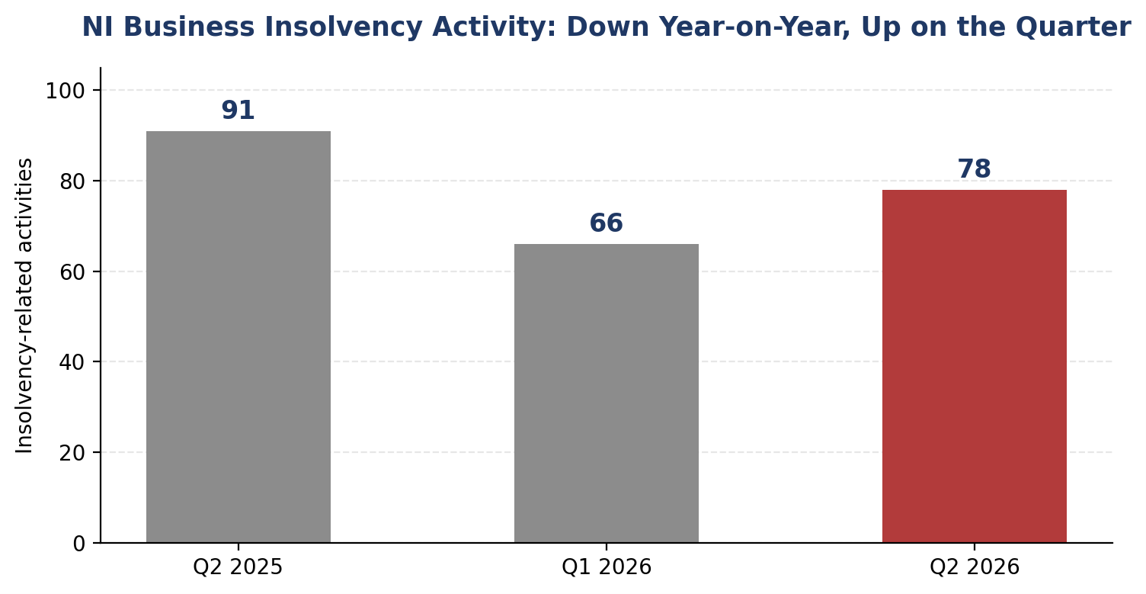
Source: R3 / Insolvency Service Northern Ireland data
The current picture in Northern Ireland is, encouragingly, not a story of runaway distress: insolvency-related activity in Q2 2026 was down 14% on the same period last year. But it was up 18% on the previous quarter, a reminder that the pressure hasn’t gone away, and that individual businesses can move from "Bad" to "Ugly" quickly once cash flow genuinely runs out, regardless of the broader trend.
The point of naming this stage isn’t to be dramatic. It’s to be honest about where the road leads if the warning signs in "The Bad" go unaddressed, and why catching problems early is so much less costly, financially and personally, than fixing them late.
Which One Are You In?
Most businesses don’t fail because they used debt. They fail because they used the wrong type of debt, structured the wrong way, without proper advice, and didn’t revisit it as circumstances changed.
The energy storage deal above worked because the structure was right from day one, and because there was already a plan to refinance onto better terms once the business had proven itself.
If you’re not sure which category your current borrowing sits in, that’s usually the first sign worth acting on. A conversation early costs nothing and keeps far more options on the table than one that happens after the bank has already moved.
The key, ultimately, is understanding the debt you’re taking on, and making sure it makes sense for your business, not just in the moment, but as circumstances change. If you’re not confident you have that understanding, make sure someone in your business does. Left unchecked, that gap in understanding is exactly what turns "Bad" into "Ugly", and it can be catastrophic.
That’s all for this week, and remember, if you think any of the services we offer through GDP can help you with your business endeavours, I would love to hear from you.
All the best,
Conor