
When Doing Nothing Is NOT An Option!
Most people don't lose everything because their business failed, or because the bank was ruthless, or because the economy turned against them. They lose everything because they waited too long to act.
When I started out in the business of helping clients with debt, I was introduced to a quote from Ernest Hemingway’s The Sun Also Rises; “How did you go bankrupt? Two ways, gradually, then suddenly”.
It's human nature. When financial pressure builds — when the letters start arriving, when the calls go unanswered, when the numbers stop making sense, when you start ignoring phone calls — the instinct is to look away. To hope it resolves itself, disappears, evaporates. To convince yourself that next month will be different.
Trust me, it won't be.
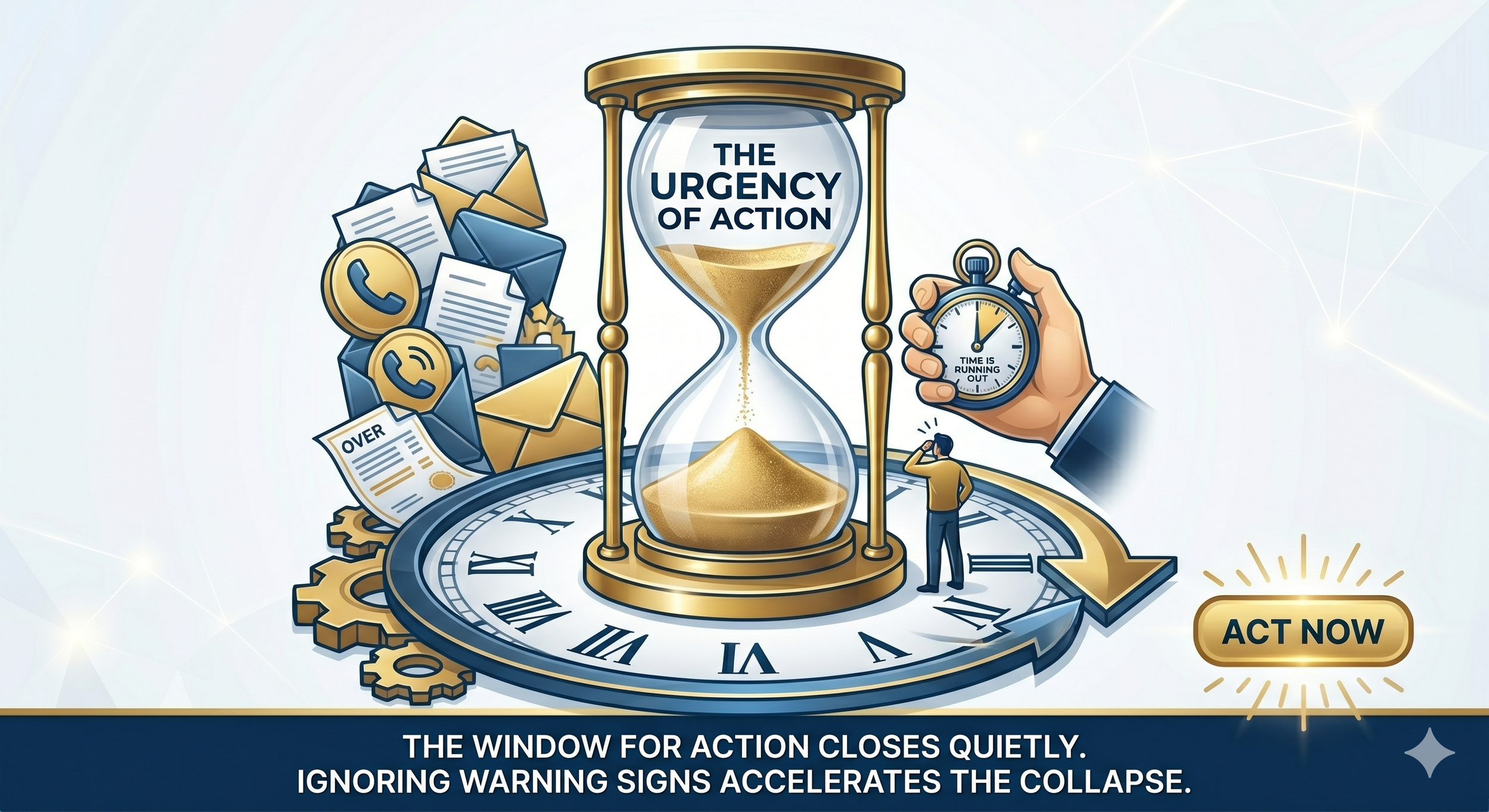
Debt doesn't disappear because you stop opening the post. It compounds. Interest accrues. Creditors lose patience. What often might have been a manageable restructuring case becomes a winding-up petition and financial disaster. What could have been a negotiated settlement becomes a forced sale. The window to protect your home, your business, your family, your livelihood, quietly closes — not with a bang, but because you ignored all the warning signs and left it too late.
Here's what most people don't realise: banks are not infallible. Like us all, they make mistakes. They miscalculate. They apply charges they're not entitled to, structure loans in ways that don't stand up to scrutiny, and — more often than you'd think — they write off debt when presented with a credible, well-argued case.
However, none of this is possible if you are not at the table, trying to figure out a solution. Procrastination is not your friend in this scenario. If you have an issue with your bank, address it. If you are unable to and don’t understand it, find someone who can.
Deal Of The Month
Last month I was able to send two of my clients an email to inform them that the bank had agreed to write off their debt, and that they would no longer chase them for the balance of the monies owed. The cherry on top of this story was that the bank also confirmed, they would refuse to accept the offer of £10,000, which I made on behalf of the customer, as a full and final settlement offer. Summary – the debt would be written off in full.
Despite the fact I have been sending these wonderful emails to my clients for over 15 years now, it is not lost on me how life changing it is for my clients to receive news of this nature from their bank.
To be more specific on this case, which was our deal of the month for April at GDP PARTNERSHIP, the clients (married couple) walked into our office over 18 months ago, in deep distress. They were involved in a family business which was doing ok, profitable. However, they were concerned as they had a bank loan that was over £50,000 in arrears for their own home, and the asset was also in negative equity to the tune of just over £600,000.
Several unique things struck me about this case at the outset, and as a result I went about working up an approach and a plan for the bank, hoping they would run with us. This involved the customer agreeing to work positively with the bank to sell the asset crystalise the shortfall and put a proposal to the bank asking them to write off the balance. The great news being 18 months later, and mission accomplished, with the bank in the end agreeing to write over £550,000 off for our client.
Total debt: £1,100,000
Total debt written off: £550,000.
The thing about this business is that every case is different, and from the banks perspective they will look at any proposal received, on a case-by-case basis. What they may do for one customer, does not necessarily mean they will apply the same approach to another customer.
It is interesting and important to say that each of the banks have a different policy when it comes to dealing with debt and loans that fall into default. Some are more open to a deal than others.
The Devil Is In The Detail
At GDP Partnership, we've sat across the table from lenders on behalf of clients for over 15 years. In many cases, we've secured meaningful write-downs, restructured unserviceable debt, and helped people rebuild from a position they thought was impossible. Not through luck or hoping for the best, more through preparation, persistence, and knowing how these conversations work, the policy of each individual bank, and then how best to present the case.
The difference between the people who recover and the people who don't is rarely due to the size of the problem they face, more to do with how they approached that problem.
The takeaway this week must be that if your finances are keeping you up at night, that feeling is a signal — not to wait, but to act. The sooner you face it, the more options you may have. Please don’t be an ostrich! We're here when you're ready.
That’s all for this week’s article, thanks for reading.
All the best,
Conor